Jackery and Goal Zero both sold portable power stations before the category got crowded. If you're comparing them now, the useful question is not which one has the better history. It is whether Goal Zero's current lineup still fits your needs against newer designs. This page is published by a Jackery-focused guide, so weigh it with that in mind. We haven't hands-tested these units, and the specs below come from public manufacturer information that changes. Confirm current details on each official site before buying.
The short answer
Goal Zero is still a legitimate brand with a real ecosystem, especially for people who want home-integration accessories or already own its gear. For most new buyers focused on value per watt-hour, battery chemistry and expandability, Jackery's newer LiFePO4 models are usually the simpler comparison. Goal Zero's older Yeti X-era models are often the weak spot, because they were designed before LiFePO4 became standard. Check which exact model you're looking at, since the lineup has shifted over time.
Where they differ
Battery chemistry and lifespan
This is the biggest factor. Many older Goal Zero Yeti models, and older Jackery Explorers, use NMC lithium-ion cells. Jackery's newer lines (the Plus and v2 families) use LiFePO4, which generally offers a longer rated cycle life. Goal Zero has also moved toward LiFePO4 in some newer products. Check the spec sheet for the specific model, and look for the stated cycle count and the capacity it is rated to retain. Different brands measure that differently, so compare like with like.
Capacity and output
Both brands cover small portable units through roughly 3 kWh stations. Goal Zero's Yeti 1500X and 3000X, for example, are listed at about 1.5 kWh and 3 kWh. Jackery's Explorer lineup spans similar ranges, up to the 3000 Pro. Raw capacity is close, so compare continuous output (watts), surge rating, and what the inverter can run. A kettle or space heater can exceed what many mid-size units can deliver.
Expansion and home backup
Goal Zero has historically emphasized a modular system, with Tank-style expansion and a Home Integration Kit for connecting to a panel through a transfer switch. Jackery offers expansion batteries on certain models, such as the 2000 Plus, and varies by model. Expansion packs are generally model-specific, so don't assume cross-brand compatibility. Our guide to mixing Jackery with other brands' expansion batteries explains why.
Solar input
Both brands sell their own panels. Connectors can look similar between brands, but physical fit doesn't guarantee safe or efficient charging. Voltage window, current limits and connector type all matter. Read whether you can use other-brand solar panels with a Jackery and verify the same limits for any Goal Zero unit.
Side-by-side checklist
| Factor | What to check on Jackery | What to check on Goal Zero |
|---|---|---|
| Battery chemistry | LiFePO4 on newer Plus/v2 lines; older models may differ | Varies by model; older Yeti X units are NMC |
| Expansion | Model-specific battery packs where offered | Ecosystem accessories; confirm what is currently sold |
| Home backup | Check the manufacturer's transfer-switch guidance | Home Integration Kit for supported models |
| Solar | Input voltage and watt limits per model | Input voltage and watt limits per model |
| Warranty | Term and registration rules on the official site | Term and registration rules on the official site |
| Availability | Confirm stock and current models | Confirm which models remain in production |
How to decide, step by step
- List your loads. Add up the watts of what must run at once (fridge, router, CPAP, lights). Note any motor-driven items with higher startup surge.
- Estimate runtime. Divide usable watt-hours by your average load, then allow for inverter losses. Treat the result as a rough guide, not a promise.
- Check chemistry and cycles. If you'll cycle the unit often, favor a model with a clearly documented LiFePO4 rating.
- Decide on expansion. If you may grow into a bigger system, confirm that the specific model supports add-on batteries today.
- Verify solar compatibility. Match panel voltage and wattage to the station's input limits.
- Compare warranty terms. Read the coverage period, exclusions and claim process on each official site.
- Check current pricing. Prices and promotions change often, so look at the official store rather than relying on any figure you've seen elsewhere.
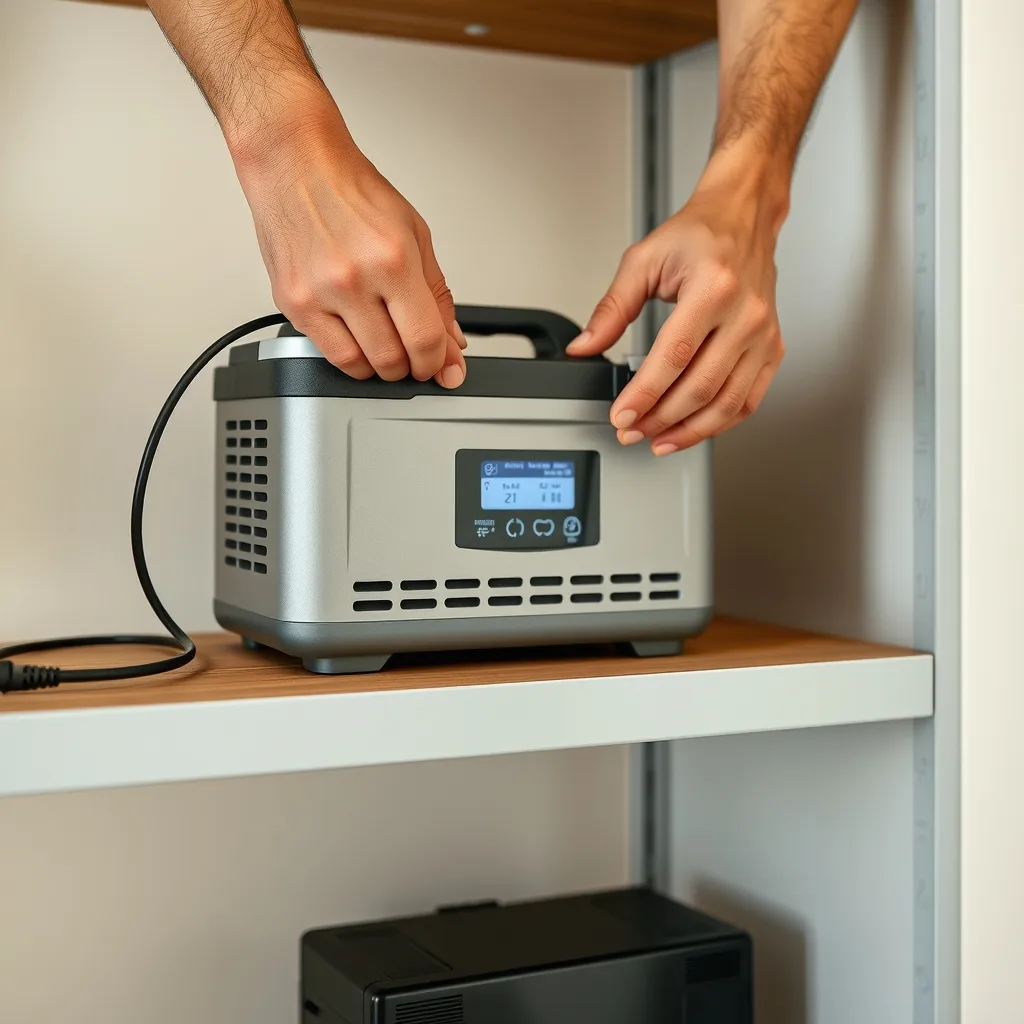 Recommended for youJackery vs EcoFlow: Specs, Charging Speed, Warranty and Value Head-to-Head
Honest tradeoffs
- Goal Zero's strength: a long-running brand with a broad accessory ecosystem and home-integration options. If you already own Goal Zero panels or a Tank, staying in the family may be the smoother path.
- Goal Zero's risk: some models predate LiFePO4 and may offer less capacity or cycle life for the money than newer rivals. Product availability can also change, so confirm that what you want is still sold and supported.
- Jackery's strength: a clear shift to LiFePO4 across newer lines, and a wide range from small to large units.
- Jackery's risk: expansion and accessories are tied to specific models. Older Explorer models don't share the newer chemistry, and other brands may beat it on certain specs or price.
Safety notes for home backup
Don't connect a power station to household wiring by plugging it into a wall outlet, which can backfeed the grid and endanger utility workers. Use only equipment the manufacturer supports, installed by a licensed electrician in line with local code. For medical devices, ask your clinician or device maker about backup power planning, and don't rely on a single source.
Other comparisons worth reading
If Goal Zero doesn't settle it, widen the field. Our overview Jackery vs Alternatives is a good starting point. For specific rivals, see:
- Jackery vs EcoFlow for charging speed, warranty and value
- Jackery vs Bluetti for chemistry, expandability and price
- Jackery vs Anker and Anker SOLIX
- Jackery vs DJI Power
- Jackery vs OUPES and Jackery vs Pecron for budget LiFePO4 options
- Jackery vs Renogy for solar kits
Two related questions: which is better for emergency backup, and how a power station compares with a generator on noise.
Bottom line
Goal Zero is still worth considering if its ecosystem matches what you own or need and the specific model has the chemistry and output you want. If you're starting fresh and want the clearest comparison on cycle life and expansion, shortlist current Jackery and Goal Zero models side by side using the checklist above. Then confirm specs, warranty and price on the official sites.
Keep reading
 Jackery vs Bluetti: Battery Chemistry, Expandability and Price ComparedThe short version Both brands sell large portable power stations for home backup, camping and RV us…
 Jackery vs Anker and Anker SOLIX: Which Power Station Brand Wins?Jackery and Anker SOLIX both sell portable power stations for blackouts, camping and RV use. They o…
 Jackery vs DJI Power: Fast Charging, Build Quality and ValueDJI is best known for drones and cameras, but it now sells portable power stations too. If you're d…