A gas generator and a solar generator can both keep essentials running during an outage, but they work very differently. A gas unit gives you more raw power and runs as long as you have fuel. A solar generator, which is a battery power station paired with solar panels, is quiet, can be used indoors-adjacent without exhaust, and needs almost no upkeep, but its energy is limited by battery size and sunshine. Which one fits depends on what you need to run and for how long.
The short comparison
| Factor | Gas generator | Solar generator (battery + panels) |
|---|---|---|
| Upfront cost | Often lower per watt of output | Often higher per watt; panels are extra |
| Ongoing cost | Fuel, oil, maintenance | Little to none; sunlight is free |
| Noise | Audible engine noise; inverter models are quieter than open-frame ones | Mostly silent apart from a fan under heavy load |
| Fumes | Carbon monoxide; outdoor use only | No exhaust |
| Runtime | Limited by fuel on hand | Limited by battery capacity and solar recharge |
| Max power | Can reach whole-house-scale outputs | Varies by model; check rated and surge watts |
| Upkeep | Fuel storage, periodic test runs, oil changes | Occasional charge top-ups |
These are general patterns, not guarantees for every product. Always check the spec sheet for the exact model.
Cost: look past the sticker price
Gas generators usually win on upfront price for the power they deliver. Solar generators cost more per watt, and you pay again if you add panels. But a gas unit also brings fuel, oil, and occasional repairs. If you only face an outage a few times a year, the fuel savings from solar may never offset the higher purchase price. If you would also use the unit for camping, RV trips, or work, the math can change.
Prices change often, so confirm current pricing and bundles on the official Jackery site rather than relying on any figure you saw elsewhere.
Noise and fumes
Noise
Conventional gas generators are loud, and even quieter inverter models are noticeable at close range. Manufacturers publish decibel ratings, but they are measured under specific conditions, so treat them as a rough guide. A battery-based unit runs nearly silently, which matters for sleeping, for neighbors, and for medical devices you need to hear over.
Carbon monoxide
This is the biggest safety issue. Gas generators produce carbon monoxide, which can kill. Safety agencies such as the CPSC and CDC advise running them outdoors, well away from windows, doors, and vents, and never in a garage, basement, or enclosed space. Install battery-powered CO alarms in your home. A solar generator has no exhaust, which removes this risk, though you should still follow the manual for ventilation and heat. If you rely on electrically powered medical equipment, talk to your doctor and equipment provider about a backup plan.
Fuel and runtime
Gas
Runtime depends on tank size and load. Manufacturers often list hours at a half load, and real runtime drops as you draw more power. In a widespread outage, fuel can be hard to buy, and you must store it safely. Gasoline degrades over time. Fuel stabilizer helps, but follow the generator maker's storage guidance. Local rules on storing fuel vary, so check them.
Solar
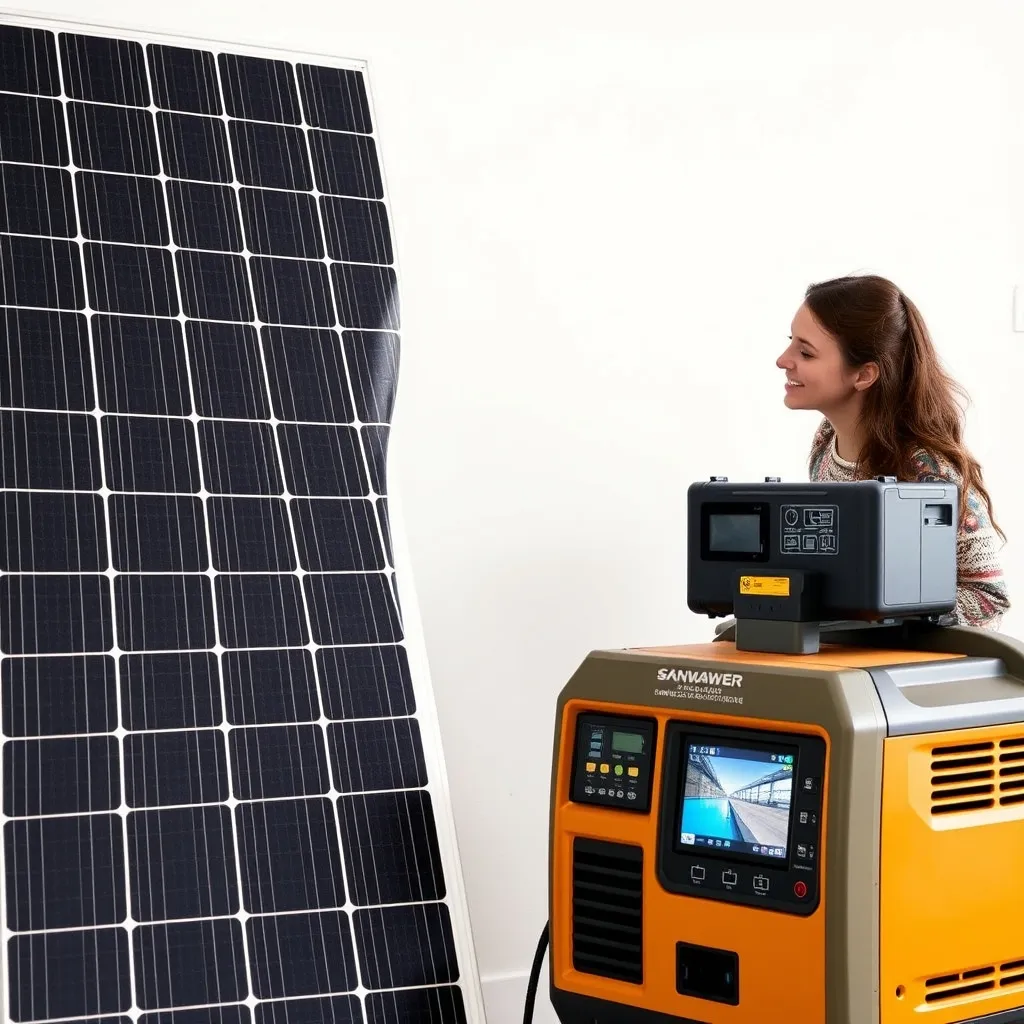
Runtime is simple math: battery watt-hours divided by your load in watts, minus some conversion loss. Solar panels then refill the battery during the day, but panels rarely hit their rated wattage. Clouds, angle, season, and shade all cut output. A multi-day outage with poor weather can leave you rationing power. See how many solar panels you need to charge a Jackery and whether you can connect panels in series or parallel for the details.
 Recommended for youPortable Power Station vs Solar Generator: What's the Difference and Which Should You Buy?
What each can realistically run
Power draw is where most disappointment happens. Fridges, routers, phones, lights, and CPAP machines are modest loads. Space heaters, electric stoves, well pumps, and central air conditioning are heavy loads that many portable battery units cannot handle. A large gas generator, properly wired with a transfer switch by a licensed electrician, can power more of a home. For the honest limits on battery units, read Can a Jackery power a whole house?. For specific uses, see the pages on RV air conditioners and job site power tools.
How to decide: a practical process
- List what you must keep running. Typical items are the fridge, phone charging, lights, internet, and any medical device.
- Find each item's watts and daily hours. Check the label or manual. Multiply watts by hours to get watt-hours.
- Note startup surges. Motors and compressors briefly draw more than their running watts.
- Decide how long an outage you are planning for. A few hours, a day, or several days leads to different answers.
- Match the tool. Use the sizing steps in How to Size a Power Setup and the guide on how many watt-hours you need to get through a power outage.
- Check the specs on the official site. Confirm capacity, output, surge rating, ports, and charging options for the exact model before buying.
Honest tradeoffs
When a gas generator makes more sense
- You need to power high-draw appliances or a large part of the home.
- Outages in your area run for many days, and you can store fuel safely.
- Budget is the main constraint, and you accept the noise and maintenance.
When a solar generator makes more sense
- Your essentials are low to moderate loads such as a fridge, devices, lights, and a CPAP.
- You live somewhere where running an engine is impractical, such as an apartment, or where noise rules apply.
- You want something that needs little maintenance and can also serve for camping or travel.
A hybrid is also reasonable
Some households keep a battery unit for quiet, everyday essentials and a gas generator for rare, long outages. It costs more, but each covers the other's weakness.
Where to go next
If you are still working out the type of setup, start with Choosing the Right Power Setup. To understand the terms, read Portable Power Station vs Solar Generator. If you want more coverage, Home Backup Kit vs Portable Power Station explains the levels of outage protection. When you are ready to compare models, see Best Jackery Power Station: Top Picks by Budget, Capacity and Use Case. If you plan to expand later, Solar Panels vs Expansion Batteries helps you choose the first upgrade.
Before you buy any generator, confirm current specs, pricing, and availability on the official Jackery site, and consult a licensed electrician for any connection to your home's wiring.
Keep reading
 How to Size a Power Setup: Watts, Watt-Hours and Runtime Math for Any UseSizing a power setup comes down to two numbers: watts (how much power your devices pull at once) an…
 Solar Panels vs Expansion Batteries: Which Upgrade Should You Add First?Short answer: add solar first if outages in your area can last more than a day or two, or if you'll…
 Home Backup Kit vs Portable Power Station: Which Level of Outage Protection Do You Need?The short answer A portable power station covers specific devices: a refrigerator, phone chargers,…